


Webinar: Using IP Intelligence to Decode VPNs, Proxies, and Anonymized Traffic
Get Unlimited Access to IPinfo Lite
Start using accurate IP data for cybersecurity, compliance, and personalization—no limits, no cost.
Sign up for freeCorporate gateways, consumer VPNs, privacy relays, and residential proxy nodes all sit behind the same "anonymous" label, but they behave very differently at the IP level, and the signals that separate them are more granular than most detection systems account for.
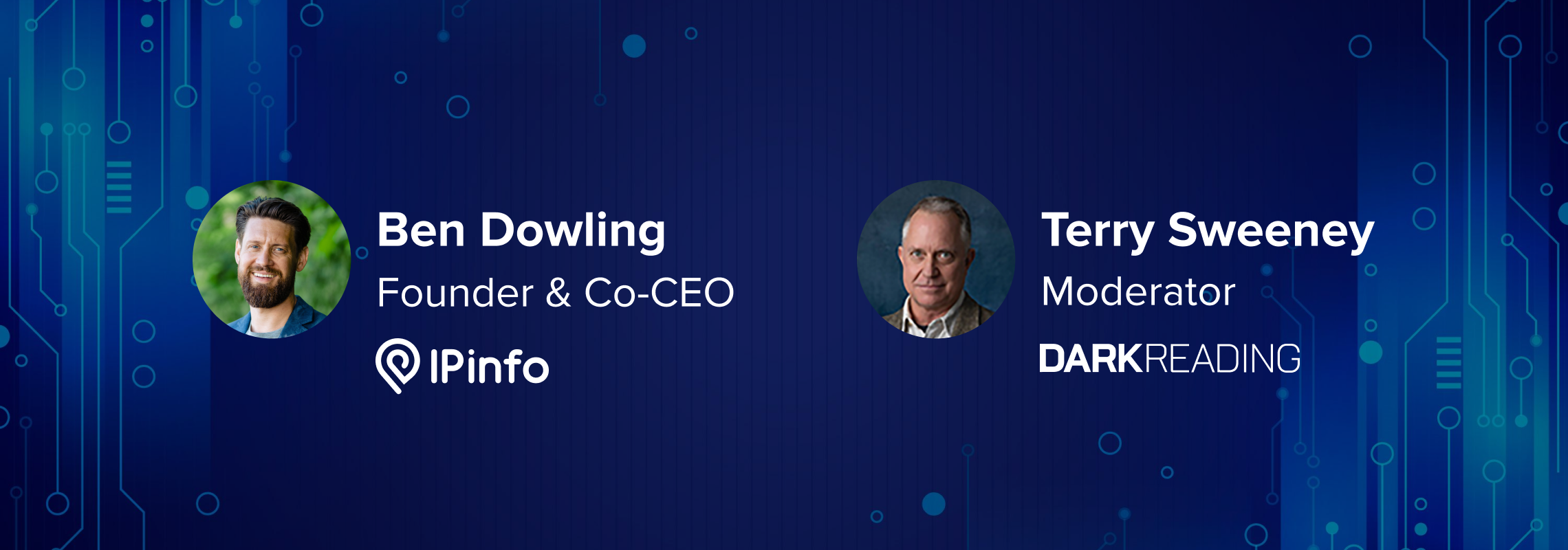
On April 30, I'll walk through what evidence-based IP intelligence reveals about anonymized traffic in a live session with Dark Reading. We'll cover how IPinfo detects and classifies different types of anonymization, what our data shows about how these networks behave over time, including findings from our VPN location accuracy research and our ongoing monitoring of residential proxy provider infrastructure.
Registrants will also receive early access to IPinfo's new research paper on residential proxy infrastructure, featuring original findings from the IPIDEA disruption and provider-level infrastructure analysis across 110+ tracked proxy networks.
Join the live webinar
Thursday, April 30 @ 1 PM EST

We’ll walk through:
- What IPinfo detects and classifies across anonymization types: from VPN and proxy flags to named services, hosting signals, confidence levels, and temporal patterns like first_seen and percent_days_seen
- What ProbeNet's active measurements reveal about VPN infrastructure, including evidence that some of the most popular providers exit traffic from different countries than they advertise
- What IPinfo's ongoing monitoring of residential proxy provider networks shows about how these ecosystems operate, including IP overlap across providers and what we observed during and after the IPIDEA disruption
What the Data Shows and Why This Matters
IPinfo identifies the networks, hosting patterns, and provider signatures behind anonymized traffic through direct observation of infrastructure. An IP is visible as part of proxy or VPN infrastructure the moment it appears, regardless of whether it's been reported anywhere.
That's what gives defenders the signals to act early: an IP associated with proxy or VPN infrastructure is identifiable before it's ever been seen in an abuse database. IPinfo's data shows the average IPv4 residential proxy IP rotates in under 8 days, and IPv6 addresses in just over a day. Infrastructure-level detection sees them as they appear, not after the fact.
This session walks through the signals that make that possible and what they reveal at scale.
Join Us Live
Anonymized traffic isn't going away and the signals inside it are more detailed than most detection systems use today. This session is about what those signals look like and what they reveal when you observe the infrastructure directly.
Save your seat
Get a practical look at how anonymized traffic behaves and how to handle it.
Share this article


About the author

Ben Dowling is Co-CEO and founder of IPinfo. Since founding the company in 2013, he has helped shape the IP intelligence industry by making accurate, verified internet data more accessible to organizations worldwide.